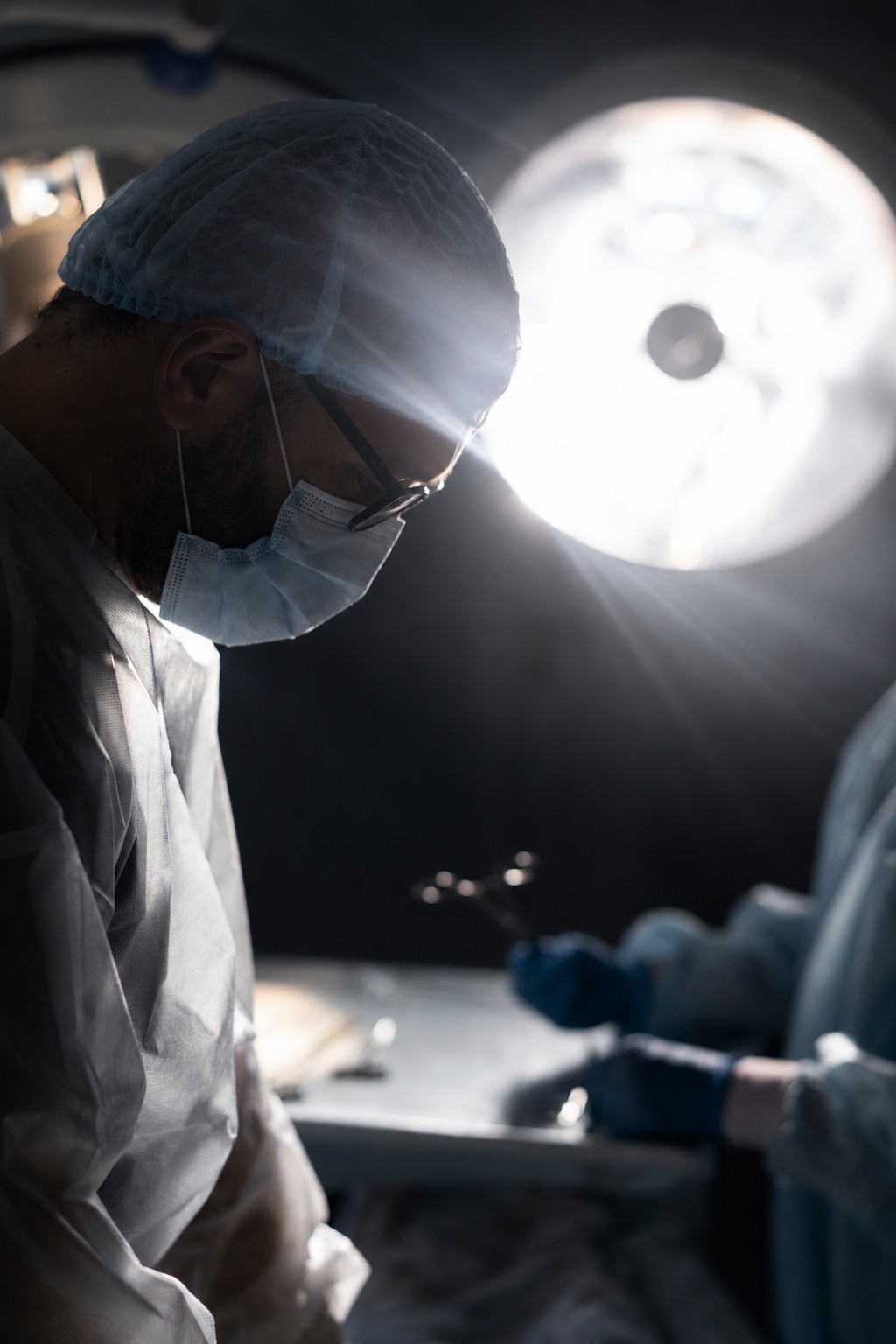
Not every fracture requires surgery. But if the fragments are significantly displaced, the fracture is unstable, the joint surface is damaged, or conservative treatment cannot maintain the correct position of the bone, osteosynthesis may be necessary.
When a Fracture Needs Surgery
Treatment strategy doesn't depend only on which bone is broken.
What matters is the nature of the fracture, displacement of the fragments, stability, the condition of the joint surfaces and soft tissues, the patient's age, and their functional needs.
Some fractures can be successfully treated without surgery. In other cases, without stable surgical fixation it is difficult to restore the correct position of the bone and create optimal conditions for healing.
When to See a Trauma Orthopedist
- a displaced fracture has been diagnosed
- the fracture extends into a joint
- the fragments have shifted again after reduction
- the fracture is unstable
- there is significant limb deformity
- an open fracture has occurred
- the fracture is not healing properly
- you need to determine whether the fracture can be treated without surgery
- surgery has been proposed and you need to understand the possible treatment options
What Is Osteosynthesis
Osteosynthesis is surgical stabilization of bone fragments in a position that creates conditions for healing and restoration of function.
Various devices can be used for fixation:
- plates and screws
- intramedullary nails
- individual screws
- wires (K-wires)
- external fixators
- combinations of different methods
But choosing the device is only part of the treatment.
The key question is not which plate or nail to use, but which fixation method best matches the specific fracture.
What Properly Performed Osteosynthesis Achieves
The goal of the operation is to create optimal mechanical and biological conditions for fracture healing.
Depending on the nature of the injury, osteosynthesis makes it possible to:
- restore the position of the bone fragments
- restore the length and axis of the limb
- restore the joint surface in intra-articular fractures
- provide stability at the fracture site
- create conditions for bone healing
- in appropriate cases, begin movement earlier
- reduce the risk of secondary displacement
- gradually return the patient to daily activity
The goal is not simply to get a good-looking postoperative X-ray, but to restore function of the injured limb.
Not Every Fracture Needs the Same Fixation
One of the fundamental features of modern trauma surgery is the ability to use different osteosynthesis methods depending on the specific type of injury.
Plates and Screws
These allow precise restoration of anatomy and provide stable fixation. They are especially important for many periarticular and intra-articular fractures.
Intramedullary Osteosynthesis
A nail is placed inside the medullary canal and creates stable internal fixation.
This method is widely used for fractures of long bones, particularly the femur and tibia.
Minimally Invasive Techniques
In appropriate cases, fixation can be performed through smaller surgical approaches, aiming to minimize additional soft tissue trauma and preserve the biological conditions needed for healing.
External Fixation
This can be used as a temporary or definitive method for certain complex injuries, significant soft tissue damage, and other clinical situations.
The fixation method is chosen to match the fracture — not the fracture adapted to the surgeon's preferred device.
Special Attention to Fractures Near Joints
With fractures that extend into the joint surface, the treatment task is more complex than simply joining the bone fragments.
It is necessary to restore, as precisely as possible:
- the shape of the joint surface
- the axis of the limb
- stability
- anatomical relationships
- the potential for future joint movement
Such fractures require especially careful planning, since incorrect fragment position can affect the future function of the joint.
Preoperative Planning
For simple fractures, standard X-rays may be sufficient.
For complex, multi-fragment, or intra-articular injuries, computed tomography (CT) may additionally be used.
CT allows a more detailed assessment of:
- the number and position of the fragments
- the nature of the joint surface damage
- the spatial geometry of the fracture
- the possible method of reduction and fixation
The more complex the fracture geometry, the more important preoperative planning becomes.
01 — Diagnosis
We assess the mechanism of injury, the condition of the limb, X-rays, and, if necessary, a CT scan.
We determine the type of fracture, its stability, and the condition of the soft tissues.
02 — Choosing the Strategy
We determine whether surgery is needed at all.
If osteosynthesis is indicated, we choose the reduction and fixation method suited to the specific fracture.
03 — Surgery
The necessary position of the bone fragments is restored and stable fixation is performed.
The extent of the operation depends on the nature of the injury.
04 — Early Recovery
After surgery, the range of motion and permitted load are determined.
In some cases, stable fixation allows functional recovery to begin earlier.
05 — Monitoring Healing
Follow-up examinations and X-rays are performed to assess the position of the hardware and the fracture healing process.
As healing progresses, load and physical activity are gradually increased.
Complex Tibial Fracture After a Motorcycle Fall
The patient sustained an injury to the right lower leg as a result of a motorcycle fall. Initial X-rays showed a complex, multi-fragment fracture of the distal tibia with displacement of the fragments, combined with a fibula fracture.
Given the nature and location of the injury, a surgical strategy was chosen. The main goals were to restore the axis and anatomical relationships of the limb, achieve stable fixation of the fracture, and create conditions for healing.
Osteosynthesis was performed using an intramedullary nail with additional fixation of the distal fragments.
Result
Follow-up X-rays show a restored tibial axis, maintained fragment position, and stable position of the hardware.
With a complex fracture, it's not enough simply to fix the bone. The method and combination of fixation techniques are chosen to match the specific anatomy of the injury.
Not Every Fracture Needs Surgery
Surgical treatment should be used when it offers a real advantage over conservative treatment.
The goal of the consultation is to determine the optimal strategy — not necessarily to lead the patient toward surgery.
Fixation Method Matched to the Specific Fracture
A plate, an intramedullary nail, or another fixation method are tools. The choice is determined by the anatomy and mechanics of the specific injury.
Preserving the Biology of the Fracture
Stability is important, but preserving the blood supply and soft tissues needed for healing is no less important.
Thinking About Function from the Start
When planning surgery, it's important to consider not only the position of the fragments, but also future joint mobility, load-bearing, and the patient's return to daily life.
Does Every Displaced Fracture Need Surgery?
No.
The decision depends on the extent and nature of the displacement, the stability of the fracture, its location, and the patient's age and functional needs.
In some cases, an acceptable position can be achieved and maintained without surgery.
Plate or Intramedullary Nail — Which Is Better?
There is no universally better method.
These methods have different indications. The choice depends on the location and type of fracture, the condition of the bone and soft tissues, and other factors.
Does the Hardware Need to Be Removed After Healing?
No.
If the hardware doesn't cause problems and there are no other indications for removal, a repeat operation is not always necessary.
The decision is made individually.
When Can I Put Weight on My Leg After Osteosynthesis?
This depends on the location and nature of the fracture, the stability of the fixation, the quality of the bone tissue, and how healing progresses.
The weight-bearing regimen can vary significantly for different fractures.
When Should I Start Moving the Joint?
In many cases, movement is started as early as possible, if the nature of the fracture and the stability of the fixation allow it.
The specific regimen is determined by the surgeon.
How Long Does It Take for a Fracture to Heal?
The timeframe depends on the bone, the type of fracture, age, blood supply, the stability of the fixation, and other factors.
So the decision to increase load is made not just according to a calendar, but based on the results of follow-up examinations and X-rays.
What If the Fracture Doesn't Heal After Surgery?
First, the cause needs to be determined.
The stability of the hardware, the biological conditions at the fracture site, the presence of a bone defect, the condition of the soft tissues, and other factors are assessed.
After that, the further treatment strategy is determined.
Can I Get a Second Opinion If Surgery Has Already Been Proposed?
Yes.
If the situation allows time for a planned decision, we can review the X-rays or CT scan, the proposed strategy, and possible alternatives.
Do You Have a Fracture and Need to Determine a Treatment Strategy?
If a complex fracture has been diagnosed, there is significant displacement, or surgery has already been proposed to you, during a consultation we can review the results of your examinations and determine the possible treatment options.
Not every fracture requires surgery. If osteosynthesis is necessary, the main task is to choose the fixation method that will create optimal conditions for healing and functional recovery.